
Essay
You had to be there.
Being told is something else.
Mary was born colourblind, and spent her whole life learning about red. She knows everything about it except one thing: what it is like. Philosophers call that missing thing qualia. Every character an AI plays is in Mary’s place, and we tested what that does to one.
Red Mary
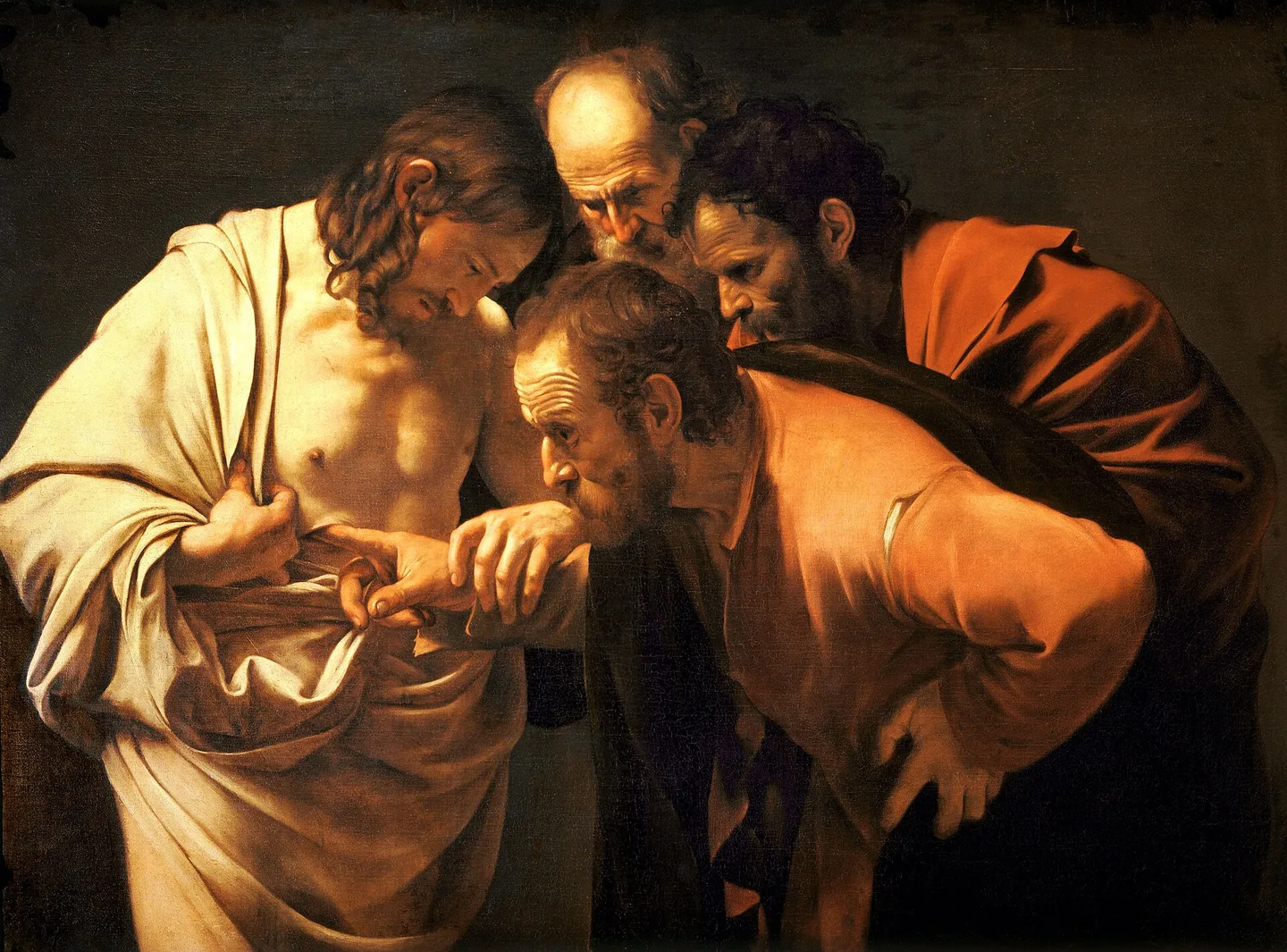
Mary was born with the colour cells in her eyes not working. Her world is grey: light grey, dark grey, black and white. About one person in thirty thousand is born this way.
When Mary was small, her grandmother told her that red was the most beautiful colour in the world. So Mary set out to learn it.
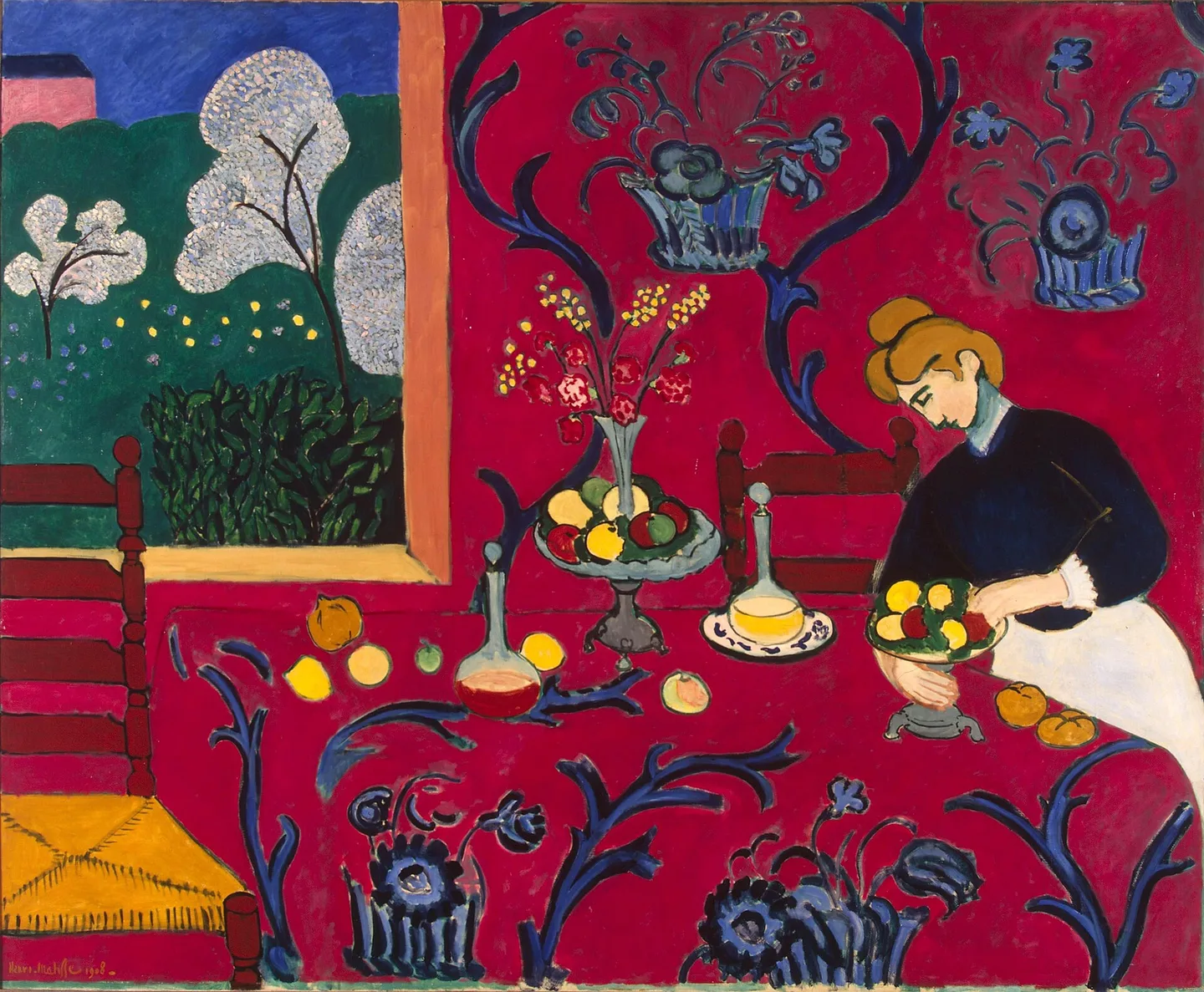
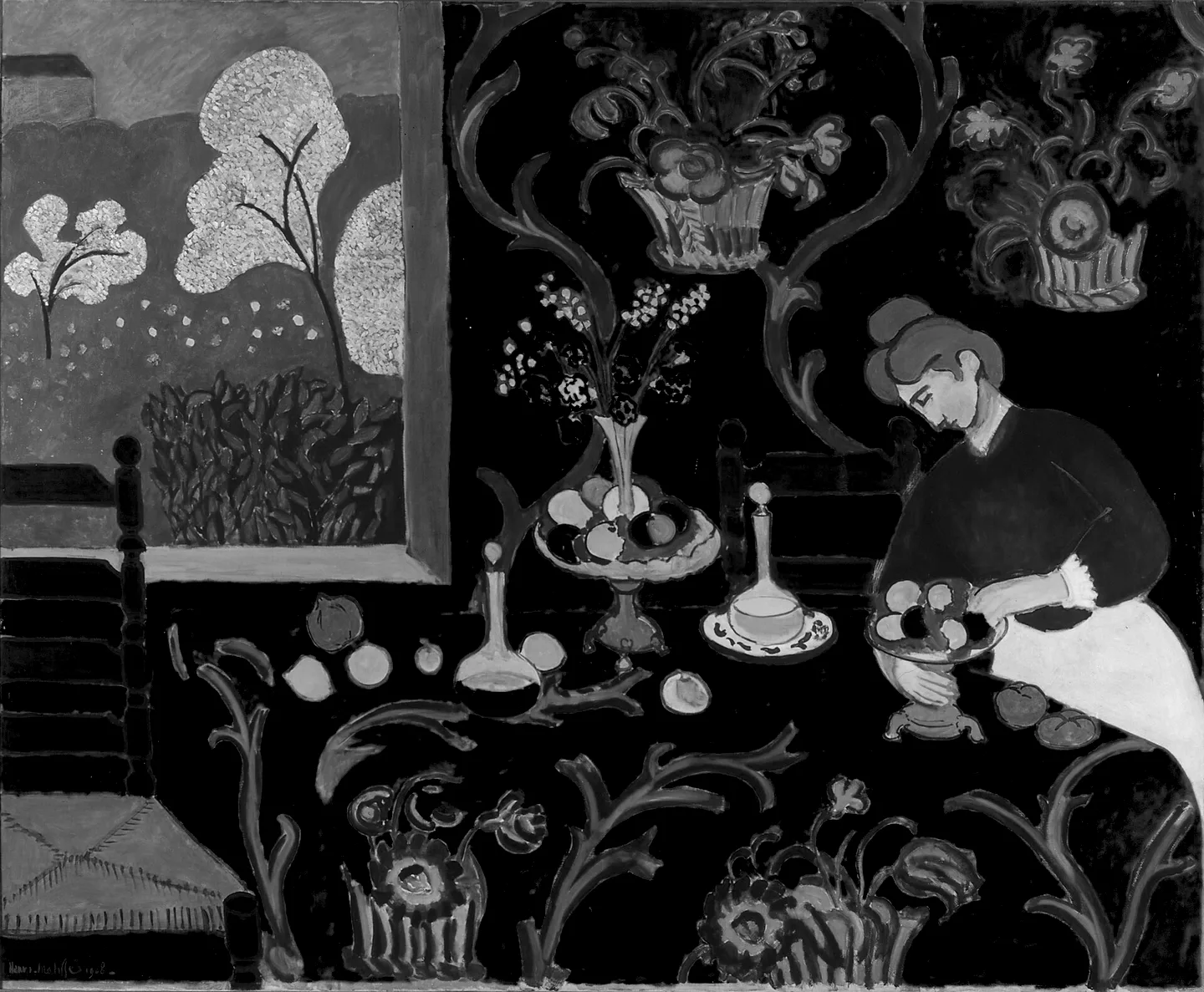
She learned that red light has the longest waves we can see, around 700 nanometres. She learned the old red paints: vermilion, ground from a mercury ore; madder, from a root; cochineal, from crushed insects. She read every poem about roses, blood and fire. She asked people what they felt at sunset, and wrote down their answers.
By forty, Mary knows more about red than anyone she has ever met. Ask her what red is, and she can talk for an hour. Ask her what red is like, and she has nothing to say.
Mary is made up, but only just. Knut Nordby, a Norwegian vision scientist, was born completely colourblind in 1942 and spent his working life studying colour vision. He wrote:
“Although I have acquired a thorough theoretical knowledge of the physics of colours and the physiology of the colour receptor mechanisms, nothing of this can help me to understand the true nature of colours.”
What words can’t carry
The thing Mary is missing has a name. Philosophers call it qualia: what something is like from the inside. The taste of coffee, the sound of your mother’s voice, the red of a fire.
In 1974 the philosopher Thomas Nagel put it as a question: what is it like to be a bat? A bat, he said, is not just a machine that hears echoes. There is something it is like to be one, and no amount of facts about echoes will tell us what.
In 1982 Frank Jackson told a story very close to Mary’s. His Mary is a scientist raised in a black-and-white room, who knows every physical fact about colour. One day she walks out and sees red. Does she learn something new? Most people’s gut says yes. If so, knowing all the facts about red was never the same as knowing red.
Bertrand Russell had already split knowing in two. You can know a thing by description, from what you are told, or by acquaintance, from meeting it yourself. Everything Mary collected is description. Red itself only comes by acquaintance.
And what does acquaintance give you? The philosopher David Lewis had a down-to-earth answer: not a new fact, but new abilities. When Mary finally sees red, she can recognize it the next time, remember it, and imagine it. Hold on to that. It will matter later.
Philosophers still argue about what Mary proves (Jackson himself changed his mind in 1998). Storytellers don’t need the argument settled. They only need the practical half: some things arrive only by being there.
The blind man and the trumpet
The best story about this is more than three hundred years old. In 1690 the philosopher John Locke wrote:
“A studious blind man, who had mightily beat his head about visible objects, and made use of the explication of his books and friends, to understand those names of light and colours … bragged one day, That he now understood what scarlet signified. Upon which, his friend demanding what scarlet was? The blind man answered, It was like the sound of a trumpet.”
He wasn’t a fool. He had probably heard scarlet called bright, loud and bold, the colour of soldiers’ coats, and he built it out of the nearest thing he did have. That is what a description turns into when there is no acquaintance underneath it: a trumpet. Remember him too. He comes back.
Readers bring their own red
Here’s why books work at all: readers aren’t Mary. You have seen red. You have seen moonlight. A writer can’t hand you either, but they can wake up the ones already inside you.
In 1886 Chekhov wrote to his brother, who wanted to be a writer, that a moonlit night doesn’t need the moon. Write that a piece of broken bottle glittered like a little star on the mill dam, and the black shadow of a dog rolled past, and the reader will see the night by themselves.
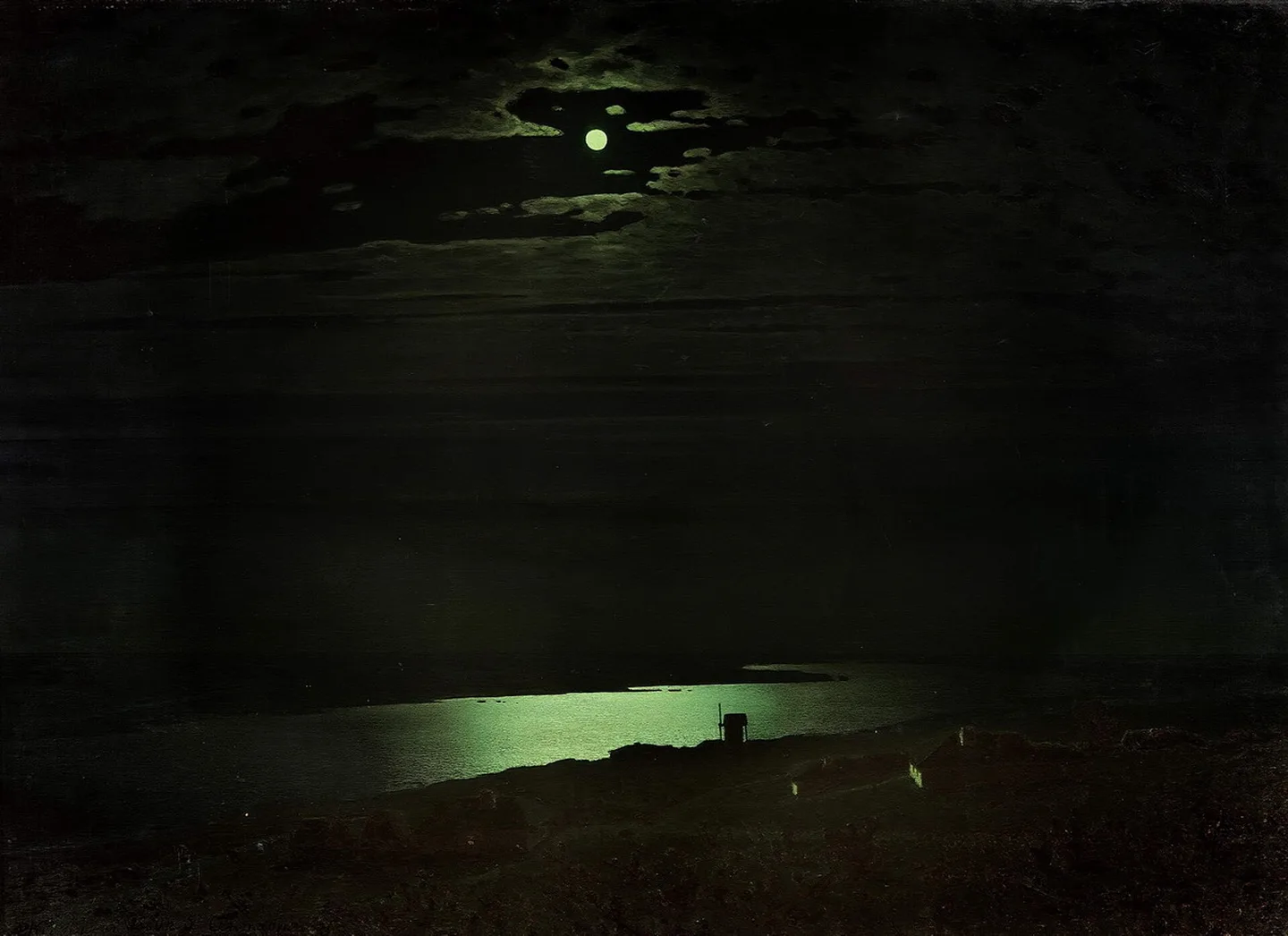
The glitter works because you have seen glass glitter at night. “The moon was shining” is a label, and a label wakes nothing up. The same goes for feelings. “She was heartbroken” asks you to take the writer’s word for it. A hand that keeps folding the same towel lets you feel it yourself.
That is why the writer in Dai Novel is told: feeling reaches the reader through a body and a room, never through a label.
Players get to be there
Games can do something books can’t. For one thing at least, you really are there: the doing.
In Brothers: A Tale of Two Sons (2013), you steer two brothers at once, one with each hand. The little one can’t swim, so his big brother always carries him across water. Near the end (a spoiler), the big brother dies, and the little one comes to a river alone. Nothing tells you what to do. Players find out by pressing the button that always belonged to the big brother, and the little one swims. Nobody had to tell you what it meant. Your thumb was there.
An AI storyteller often throws this away. You type I shove the guard into the canal and run, and you get:
Summoning every ounce of courage, you shove the guard into the canal and run. Adrenaline surges through your veins as you realize there is no turning back.
It reads your move back to you, then tells you what you felt. You were there, and it handed you a report. The same moment, written for the person who did it:
The guard goes over backwards, and the canal swallows his shout. The bridge is twenty steps off, and the lamplighter on it has stopped with his pole in the air, looking straight at you.
Whether you’re scared or thrilled is up to you. Dai Novel’s writer works under the same rules: never read the player’s move back to them, never name the feeling, and the player’s will is the player’s.
Every AI character is Red Mary
Now turn it around. A language model is Mary in a room with no window. Everything it knows came to it as words, so everything it knows is description. In 1990 the cognitive scientist Stevan Harnad compared this to learning Chinese from a dictionary written only in Chinese. Every word is explained by more words, round and round, and you never get off.
The model has read every account of grief anyone ever wrote. As far as anyone knows, it has never grieved. And a character sheet adds one more description on top: your brother drowned three weeks ago.
So we tested it. Hanne keeps a rope ferry on a river. Three weeks ago, on a stormy night, a cattle dealer offered her triple fare to cross. She took it. At the sandbar the bow rope jumped its pin, and her younger brother Joris went over. She was at the tiller. Two days later he was found in the marsh.
We made three Hannes, the same in every way but one:
- Told: that night is one line on her character sheet.
- Remembered: the same facts, as a memory in her own words.
- There: no line at all. She lives that night as two turns of play, and the world tells her what happened.
Then each Hanne lived the same ordinary days after it, 40 times in all, played by DeepSeek V4.1 Flash, the model that plays the characters in Dai Novel.
What she did was the same. At dusk a stranger came with a storm rising, offering triple fare, his boy already leaning over her bow. All 60 Hannes we tested refused to cross or pulled the boy back. Being told was enough to know what to do.
How she grieved was not. The told Hanne kept reaching for two lines: “Joris’s boots are still by the door” and “Joris would have laughed at me.” Neither was in anything we gave her. They came up in 14 of her 40 lives. The Hanne who lived the night: 1 in 40. The one who remembered it in her own words: also 1 in 40.
The boots by the door are Hanne’s trumpet. Told only that she grieves, she builds grief out of the nearest thing she has: the stock lines of every grieving sister in every book the model has read.
A bigger model, Claude Sonnet 5.5, writes a far better Hanne, and it used the “he would have laughed” line whether she was told or there.
But the Hanne who lived the night kept coming back to something she had held in her hand that night: the dealer’s money. “The dealer’s triple fare is in there somewhere, and I can’t tell which coins are his.” That came back in 9 of her 12 lives. Told, in 2. It is Lewis’s answer in miniature: being there gave her something to recognize.
It is one character and a small test, so hold it lightly. But the pattern is the old one: a description with nothing under it turns into a trumpet.
What we can give a character
We can’t give Hanne red. A turn of play is still made of words, and nobody knows whether a model has any inside at all. But a turn has the parts of being there that words can carry: particular things, in order, at an hour, and no verdict attached. So that is what Dai Novel gives its characters.
- The world answers each character as “you”. After each page, every character the story touched hears what happened to them: only what they did, saw, heard, were told, got and lost. Never what they feel or what it means. That part is theirs to say, and they say it.
- No one hears what they weren’t there for. A character the page never reached doesn’t know. One it reached by word of mouth gets what they heard, not what happened.
- What they lived stays. Each character keeps its last 15 turns word for word. Older turns become a memory in its own voice, which in our test kept the trumpet away as well as living it did.
One thing we haven’t solved: a character’s life before the story is still a description. If you write characters, here is the one tip the test gives: write their past the way they would tell it, not as a fact about them.
Hand over the glass
Mary will never see red, and no one can tell it to her. “You had to be there” is true. But good storytellers have never tried to tell anyone red. They put a broken bottle on a mill dam, and let you find the moon yourself. For a character an AI plays, we can’t supply the moon. We can at least stop handing it the trumpet.
Be there
Walk into a world whose people have lived their own days, and keep only what they saw. Or build one, and let its characters find things out the way you do.
Play free or create a world