
Essay
Why your story world feels empty, and how to fix it.
Some stories stay with you for years. Others you forget within a week, even when their twists are better. Which kind are you writing?
For years I thought the fix for a forgettable story was more plot. Tighter beats. A sharper midpoint. A villain with a better speech. Every craft book on my shelf agreed with me, which should have been my first warning.
It finally made sense one night, deep in Tappei Nagatsuki’s Re:Zero. Subaru had just died again, the days had started over, and the world simply did what it had done before. The same people walked the same streets toward the same appointments, and not one of them was waiting for him. I put the book down and thought about my own drawer of plots. In my worlds, nobody had anywhere to be. The name came later, from a video essay by Ben the Arthurian: the empty world epidemic. A great plot set in a place where nothing else is going on.
I recognized every symptom. I had written most of them myself. Before you read on, think of the last world you built, or the last one you read.
Showroom worlds
Did it feel like a place where people live, or like a showroom? In a showroom everything is set up for the hero to walk past, and nobody actually lives there. A few questions tell them apart:
- Does your city exist beyond the street your hero is standing on?
- What does your villain do on a Tuesday?
- Who is poor in your world, and why? Who is rich, and why?
- Did anything go wrong before your hero arrived?
That last question matters most. If nothing was happening before your story began, the plot has to carry the whole world on its own. It can’t. A plot alone is not enough to make a world feel real.
The ploughman doesn’t look up
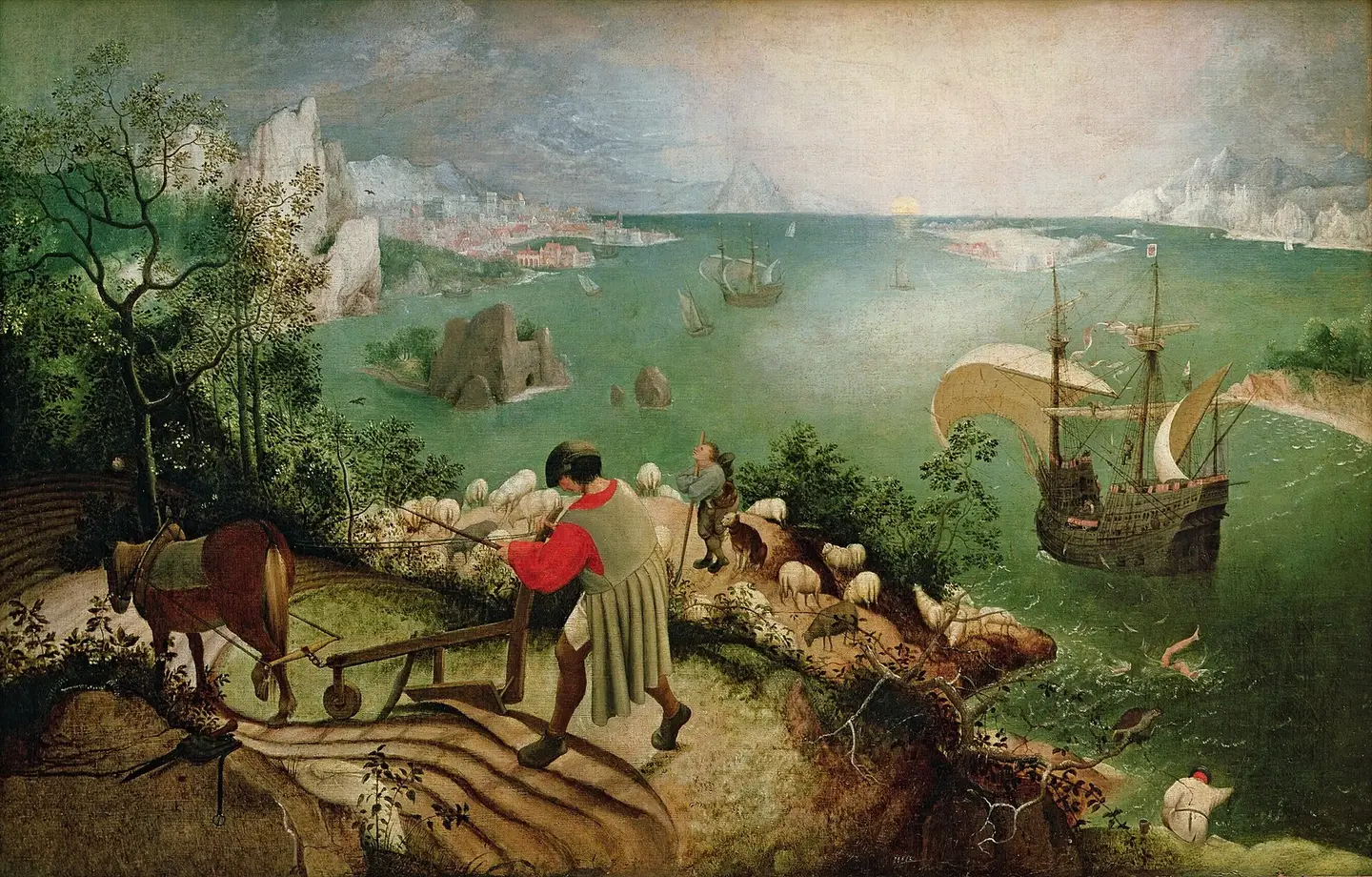
Bruegel paints the most famous fall in mythology and hides it in the corner. Two legs, a splash. The ploughman keeps ploughing. The ship keeps sailing; it has cargo and a port to make. And that is exactly why the fall lands. The world does not stop for the hero.
So, in your story: who is busy with their own life while the hero’s story happens?
Tolkien knew. The Lord of the Rings is a small part of a history he had been writing for decades: languages, a creation myth, wars the characters only half remember. In a letter he says he “wisely started with a map, and made the story fit”. World first, story second.
Is more lore the answer?
That was my first conclusion, and it was a trap. I know, because I wrote the encyclopedia. Sixty pages of history for a world nobody ever visited. Dynasties. A calendar with its own leap year. A church with three heresies. Then I put a person in it, and she had nothing to do. Everything had already happened. It was a museum: everything in it had already stopped.
A deep world is not a big world. What makes it deep is pressure: somebody in there wants something badly enough to act tonight, hero or no hero. Middle-earth isn’t deep because its timeline is long. It is deep because Sauron keeps preparing for war the whole time the hobbits are eating second breakfast.
So how much do you know about your world? I think that is the wrong question. Try this one instead:
What is this place doing on a Tuesday, when nobody is watching?
What a 2 a.m. light novel knew
I read Tolkien slowly, with the map open. I read light novels at two in the morning on my phone, one more chapter, one more chapter. For a long time I thought those were two different tastes.
Plenty of what I read at two in the morning is the epidemic in its purest form. A guild hall. A status window. A demon lord politely waiting in his castle until the hero has grinded enough levels to visit. I read them anyway. I will read the next one too.
And then there is Re:Zero, the book that made all this clear to me. Subaru, a shut-in in a tracksuit, lands in a fantasy kingdom with one power: when he dies, the days start over. Every loop, the world does the same things. In the first arc a hired killer walks into the same thieves’ den on the same night, because somebody paid her to fetch a stolen insignia long before Subaru showed up. She isn’t there for him. She has a job. Later a cult marches on a village whether or not he has worked out why, and the people around him keep plans of their own that he only discovers by dying because of them.
Why does a loop hurt more than a death? I think because Return by Death lets you watch the same ordinary days of a world again and again. The world never changes its plans to make things easier for him. Tolkien and my 2 a.m. habit turned out to want the same thing: a world that was already moving when the hero got there.
Three layers, and the hero is the smallest
Ben’s essay describes three layers a deep world is built from. Here is how I read them, with the order that matters most: the hero comes last.
The creation story
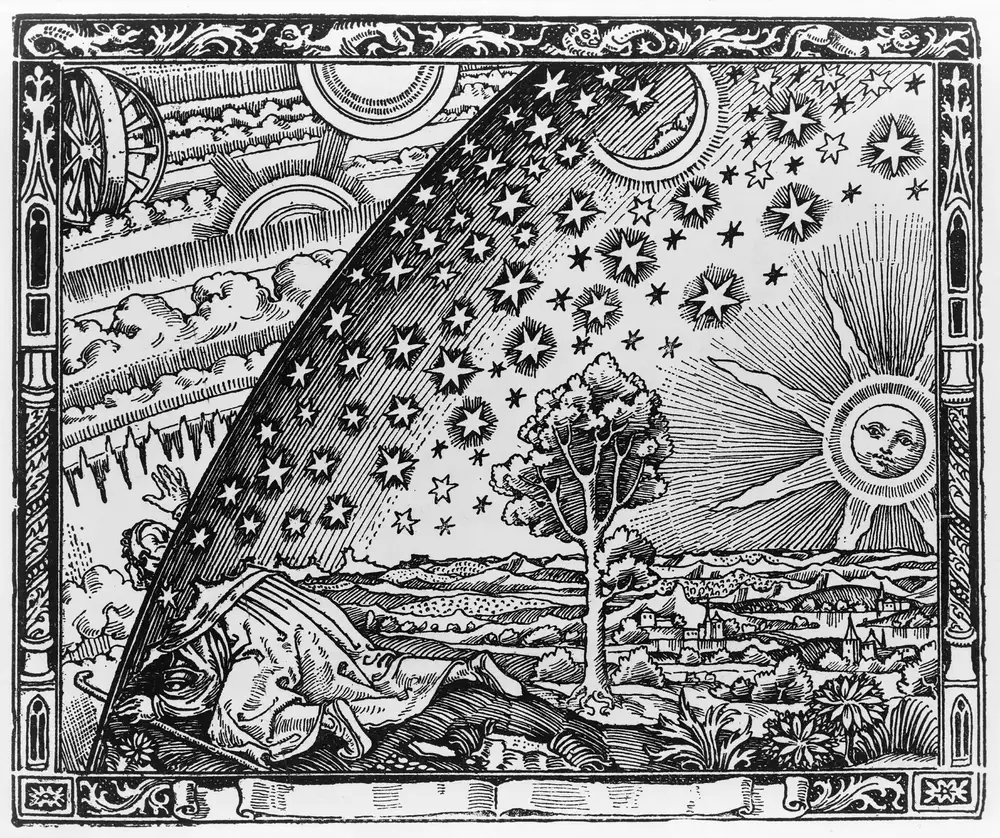
Not gods singing the universe into being, or not only. What is true here that is true nowhere else, and what does it cost? Take a river city built where a drowned god was cut in two by a flood. Everything that crosses the river pays it something. Instantly there are toll-keepers, bridges owned by guilds, smugglers who cross for free, priests who call the toll holy and merchants who call it a tax. One rule, and everyone in the city has a stake in it.
A rule that costs nothing doesn’t matter. A rule that never shows up in anyone’s day is just trivia. What does the strangest rule in your world cost, and who pays it on an ordinary morning?
The macro-narrative
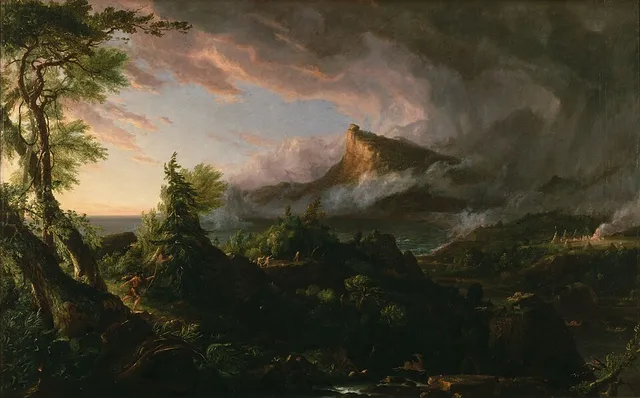 The Savage State
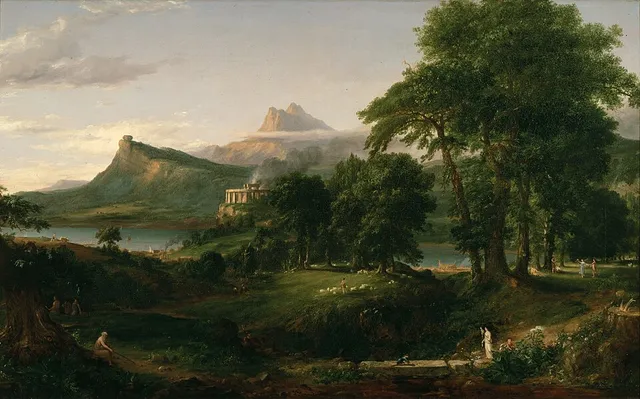 The Arcadian State
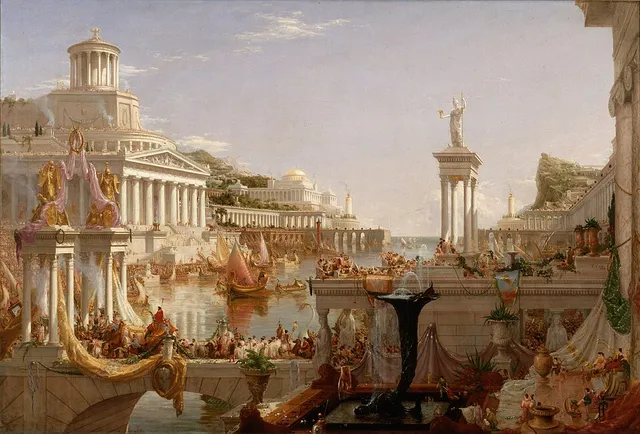 Consummation
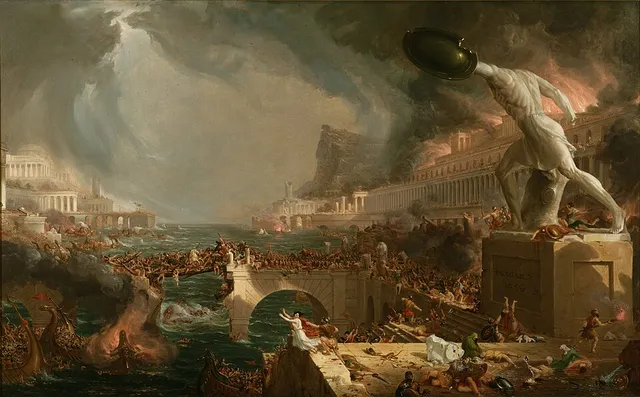 Destruction
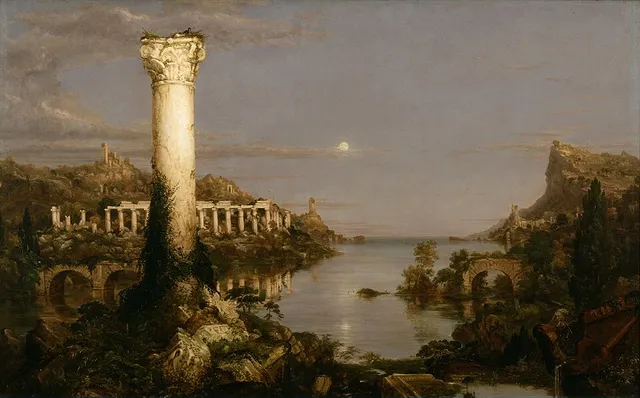 Desolation
The big conflict turning across the whole world, slowly, the way Cole’s valley turns from forest to empire to ruin. In the river city, the guilds are buying the bridges one by one, and there is one free bridge left. Nobody is the main character of that story. Everybody is inside it. It is a process, not a plot: it moves on its own, whoever the hero is. What is turning in your world that no single character could stop?
The character’s story
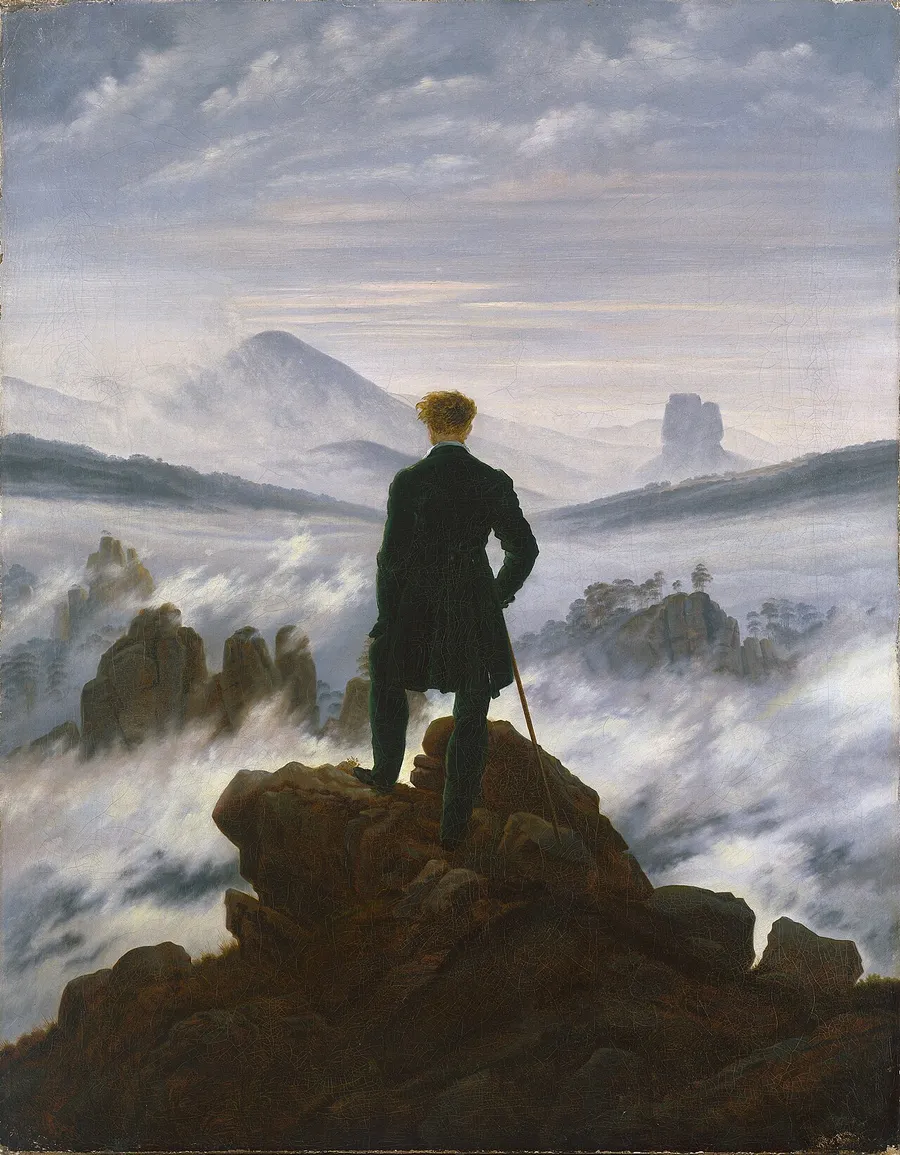
Only now, the character: the person the reader sees the world through. In the river city she runs a ferry, the last crossing the guilds don’t own. She doesn’t want to save the city. She wants to keep her boat. But when that last bridge sells, the whole poor district will be standing at her dock at dawn. However great she becomes, she starts as an ordinary person in front of forces far bigger than her. The forces have to be real for that to mean anything. Without those bigger forces, she is just a girl with a boat. What does your hero want that is smaller than the plot?
When the world says yes to everything
When language models got good at prose, I did what everyone did. I asked one to be my storyteller and dropped myself into a fantasy city. It was dazzling for about forty minutes. Ask for a tavern, get a tavern. Ask for a conspiracy, get one. Ask to win, and win.
Then it clicked: this is the empty world epidemic, only faster. Nothing existed until I asked. Nothing wanted anything before I arrived. The barkeep’s scar had no story and never would; it was gone by the next conversation. It said yes to the tavern, yes to the twist, yes to me. Which leaves a question I still can’t shake: if a world agrees with everything you say, is there anyone in it but you?
The old text adventures understood this in 1977. The white house in Zork was there before you typed go north. The rooms did not care whether you entered them. Now that AI can make up anything on the spot, have we lost that without noticing?
So I built one that says “you can try”
Dai Novel is a text adventure on steroids, and the feature I am proudest of is a refusal. You control one character: what they do, say, think and feel. Write “the guard believes me” and the page reads it as an attempt. The guard gets a vote. The world answers for everyone else.
And the world is built before you arrive. When our World Helper helps an author write a premise, its guide asks for rules that each carry a cost, a limit and a mark on daily life, plus hidden truths that are true even if the player never arrives. That phrase is the whole philosophy, so I made it a requirement. World Phases keep the world moving: situations with pressure, and events that keep happening with or without you. Some characters stay offstage until their phase opens. There is even a button that takes your last turn back, and yes, I think of Subaru every time I press it. You get to try again. Same world. Same people already on their way.
Would you rather be agreed with, or answered?
What’s still broken
Plenty. A tool can’t come up with your core idea for you; give Dai Novel a thin premise and it will happily run a thin world. The models still flatten things, still settle a tension three turns early. Sometimes a background character drops everything for the hero when they shouldn’t. And some nights I suspect I have this backwards, that a strong enough writing voice can make up for an empty world. Then I reread the stories I never left, and every one of them has a world on the other side of the page, busy, indifferent, carrying on without me.
One question to take home
Next time you sit down to write, leave the plot alone for one evening. Ask what your world is doing on a Tuesday. Who is going to act tonight? What does the rule cost, and who pays it? What is changing in your world right now?
If you can answer that, the plot will come much more easily. If you can’t, spend some time with that question. It might be where your story actually starts.
Build a world that keeps moving
Write the rules, set events in motion, and let someone else play your world. Or play one yourself.
Create a world or play one free