
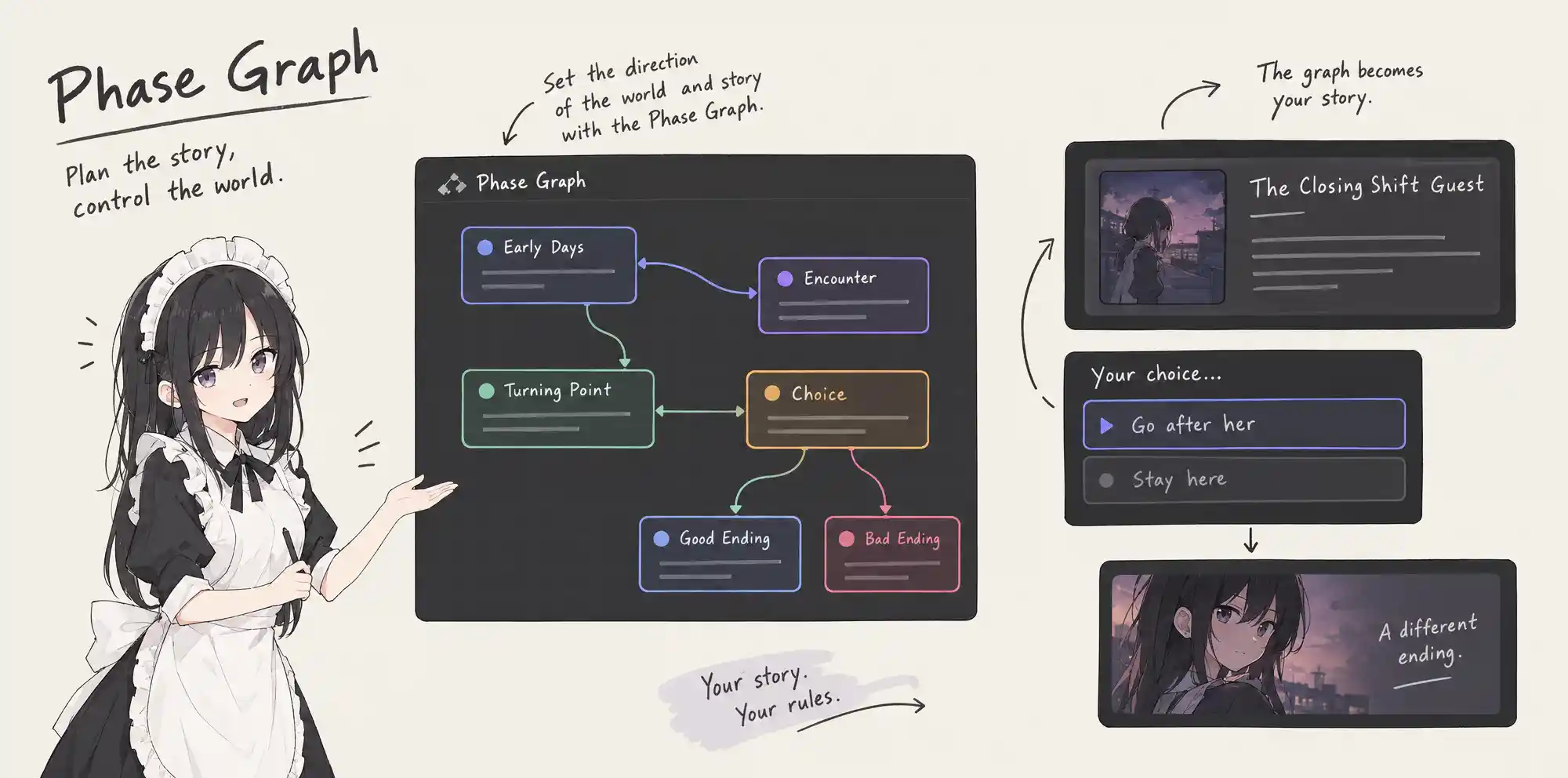
विश्व चरण
Story direction को आकार दें।
World Phases हर scene पहले से लिखे बिना बड़ी story के आगे बढ़ने के तरीके को define करती हैं। Graph देखने के लिए World Editor sidebar में Phases खोलें।
एक phase एक flexible narrative state है, prewritten chapter या required scene sequence नहीं। AI moment लिखता है। आप direction बनाए रखते हैं।
Phase की संरचना
चरण का नाम
Graph पर आसानी से scan किया जा सकने वाला छोटा, concrete label।
खिलाड़ी के लिए विवरण
Situation और stakes का reader-facing summary। इस field में internal direction न रखें।
चरण की सामग्री
Director और Writer के लिए internal context। Dramatic purpose, current world state, active pressures, objective और tone का वर्णन करें। Phase किस situation से शुरू होती है और उसका time scale (एक रात, एक season, कई साल) भी बताएँ: play में अगली phase सिर्फ़ इसी text से चुनी जाती है।
एक उपयोगी shape यह है:
PURPOSE: the dramatic job of this stage
STATE: conditions that remain true while the phase is active
PRESSURES: factions, scarcity, danger, or obligation squeezing the cast
OBJECTIVE: one verifiable end-state
KR1/KR2/KR3: observable results
TONE: the intended emotional register
BG LINK: how the background story system advances
प्रगति का तर्क
बताएँ कि story इस phase से कब निकलती है, और कौन-सी अगली phase किस evidence पर fit होती है। दो या तीन छोटी lines काफ़ी हैं:
ADVANCE: After they commit to a faction or find a route into the vault
BRANCH: phase_vault_s2_0 if they side with the guild; phase_vault_s2_1 if they go in alone
AVOID: Do not reveal what is inside the vault yet
ऐसी conditions लिखें जिन्हें play में check किया जा सके ("जब player सबके सामने … का साथ दे"), कभी "जब story ready लगे" नहीं। Pacing और time scale Phase Content में रखें।
Graph के नियम
- हर scope में step 0 पर एक entry phase होती है।
- Outgoing edges को बाद के step की ओर point करना चाहिए।
- एक phase कई valid next phases में branch कर सकती है।
- कई branches बाद की एक phase पर converge कर सकती हैं।
- जब story को अगला stage चाहिए, हर non-ending leaf को आगे connect करें।
- Ending phase की कोई outgoing edge नहीं होनी चाहिए।
Play के दौरान saved phase current phase पर रहती है या उससे connected एक next phase पर move करती है। Scene उस direction के भीतर फिर भी बदल सकता है।
पहला arc बनाएँ
तीन connected phases से शुरू करें: ordinary pressure, एक real trial और point of no return। हर stage का clear objective और transition rule होने के बाद ही विस्तार करें।
पात्र शाखाएँ
Shared world spine बनाएँ, फिर जब उनकी story को अलग दिशा में जाना हो, तब Main Character के लिए अलग branch जोड़ें।
Hooks और payoffs
उनकी payoff phase से पहले महत्वपूर्ण promises plant करें। Open hooks की संख्या manageable रखें और final reveal से पहले core hooks को visible progress दें। Progression Logic की hook lines Story Studio पढ़ता है; play में Writer उन्हें कभी नहीं देखता, इसलिए जिस promise को ज़िंदा रखना है उसे Phase Content में भी लिखें।
दुनिया में बदलाव
कहानी जब किसी phase में प्रवेश करती है, तब वह phase दुनिया भी बदल सकता है: अब तक रोके गए पात्र को ला सकता है, किसी को नया रूप दे सकता है, map बदल सकता है, या premise अथवा game rules दोबारा लिख सकता है। Start phase कभी कुछ नहीं बदलता। देखें चरण परिवर्तन और Phase lens।
बड़े graph की planning में सहायता के लिए Phase Architect उपयोग करें।